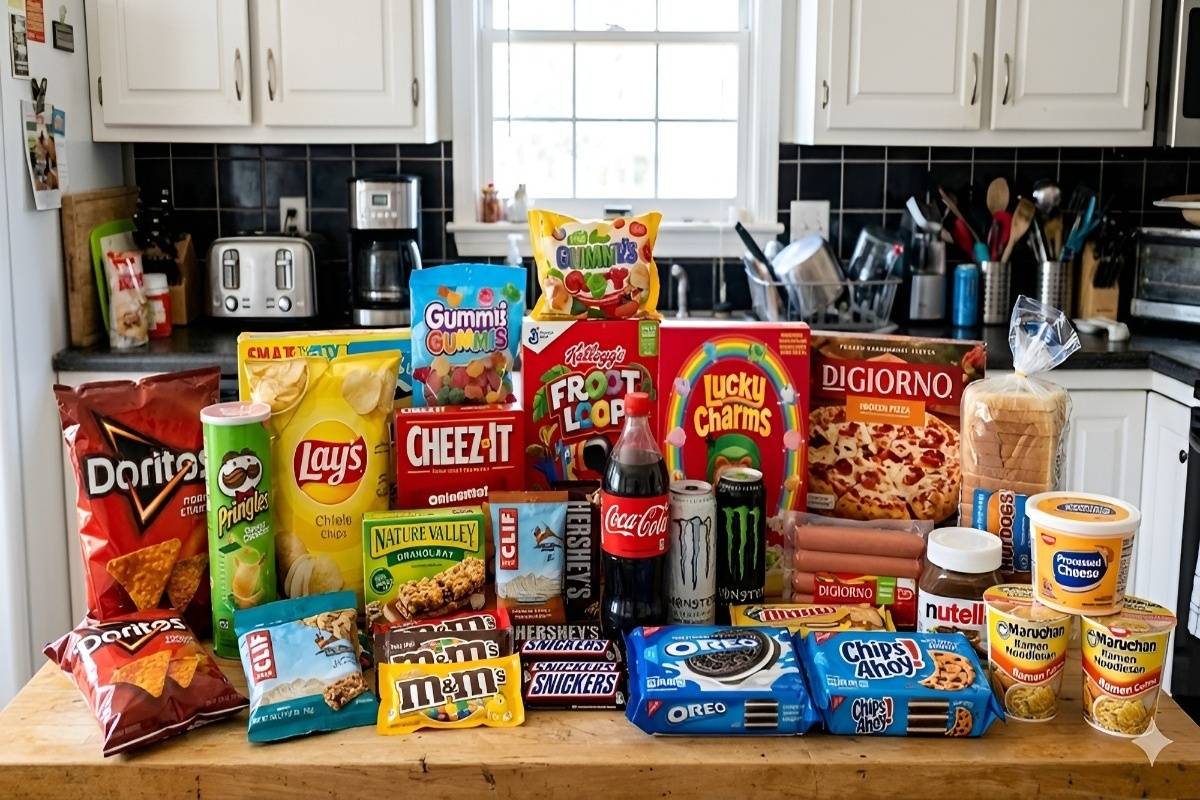
We often think we are choosing our meals, but in the modern grocery store, our biology is being hacked. We have entered the era of ultra-processed foods; products that are less “food” and more “industrial inventions.” While we used to worry about fat or sugar, the real danger lies in the complex processing that strips nutrients and replaces them with chemical proxies designed to override our natural fullness signals.
What Are Ultra-Processed Foods, Exactly?
To understand the ultra-processed foods crisis, we look to the “NOVA” classification system. Unlike “processed” foods (like canned beans or salted nuts), ultra-processed items are made mostly from substances extracted from foods, such as hydrogenated fats, modified starches, and protein isolates. They contain additives like emulsifiers, flavor enhancers, and colors that you would never find in a home kitchen.
The “Hall of Fame” of Ultra-Processed Products
Many people are surprised by what actually qualifies as ultra-processed foods. It isn’t just “junk food”; it’s often marketed as “healthy” or “convenient.”
- Industrial Breads: Your standard supermarket sliced white or whole wheat bread, packed with dough conditioners.
- Reconstituted Meat: Chicken nuggets, fish sticks, and many deli meats.
- Instant Everything: Cup-o-noodles, dehydrated soups, and “just add water” meals.
- Sweetened Breakfasts: Most boxed cereals, flavored yogurts, and “energy” bars.
- Sugar-Sweetened Beverages: Sodas, fruit drinks, and even some “plant-based” milks with thickeners.
The Biological Cost of Industrial Eating
Why does this matter for your biological durability? Ultra-processed foods are “hyper-palatable,” meaning they activate the brain’s dopamine centers with a force that whole foods cannot match. This leads to passive overconsumption. Beyond weight gain, these foods have been linked to systemic inflammation, gut microbiome disruption, and an increased risk of cardiovascular disease.
- Evidence: The BMJ: Ultra-Processed food exposure and adverse health outcomes
- Evidence: Cell Metabolism: Ultra-Processed Diets Cause Excess Calorie Intake
Reclaiming Your Metabolic Integrity
Eliminating ultra-processed foods isn’t about perfection; it’s about shifting the ratio. Start by reading the “back” of the label rather than the “front.” If the ingredient list looks like a chemistry experiment, your body will likely treat it like one. Focus on “single-ingredient” foods such as eggs, oats, meat, and vegetables, to give your metabolism the break it deserves.
Discover more on The Daily Recovery