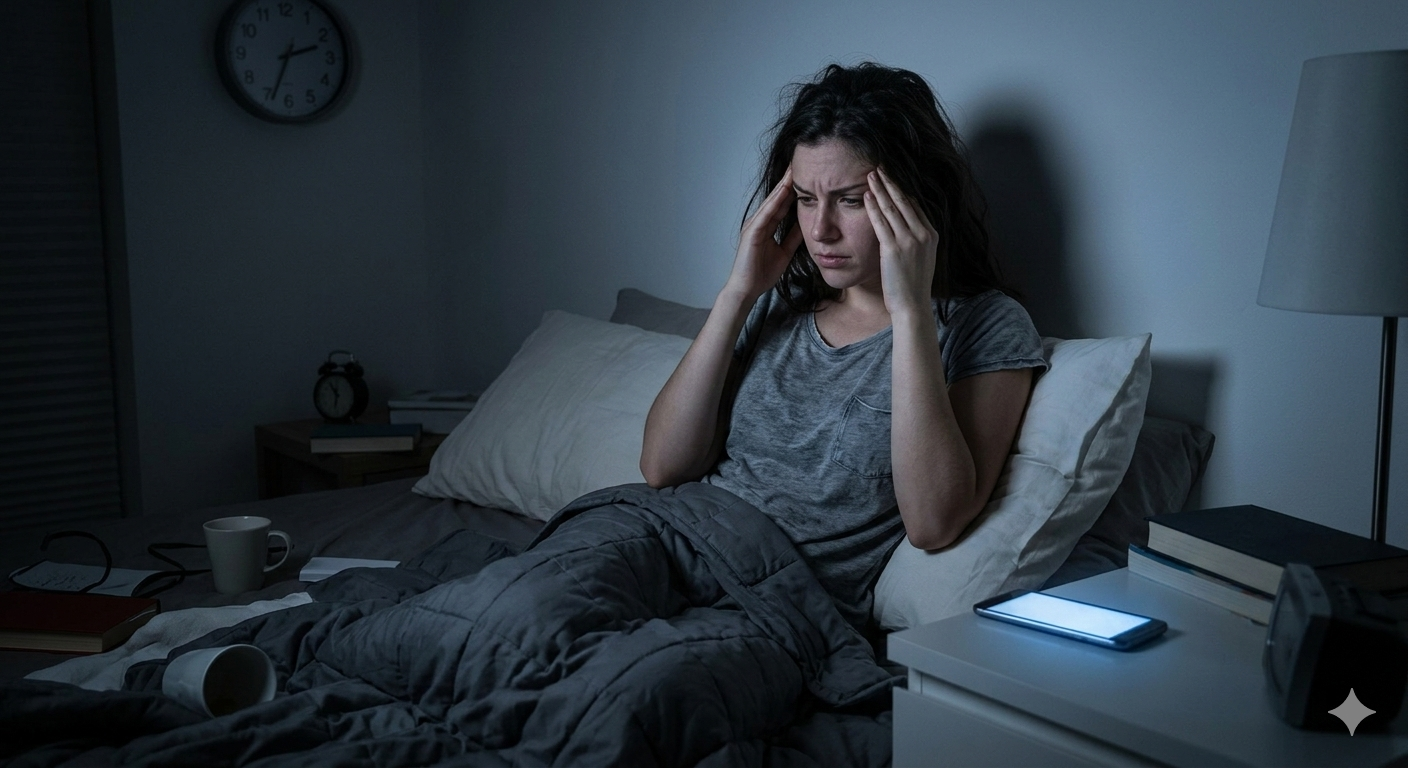
The sun has been down for hours, the house is silent, and the cool sheets of your bed are inviting you into oblivion. Yet, as you stare at the ceiling, your mind is racing at a hundred miles per hour. You’re mentally replaying a conversation from three years ago while simultaneously planning your grocery list for next Tuesday. You feel “tired,” but you’re “wired.” If this sounds familiar, you aren’t just a victim of a busy mind; you are likely experiencing a pharmacological shadow of the world’s most popular drug. In our quest for productivity, caffeine has become a silent architect of a sleep deprivation crisis, ultimately destroying the way our species rests.
The Great Molecular Deception
To understand why that 3:00 PM espresso is still haunting you at midnight, we have to take a look at the chemistry of a “trick.” Throughout the day, your brain builds up a substance called adenosine, a molecular barometer of how long you’ve been awake. The more adenosine that builds up in your brain’s receptors, the sleepier you feel.
This is a “sleep pressure.” However, caffeine is a master of disguise. It has a molecular structure so similar to adenosine that it fits perfectly into those same receptors, effectively “plugging” them. It doesn’t actually get rid of your “tiredness; it simply hides the signal from your brain, leading you to believe you have a reservoir of energy that doesn’t actually exist.

The Hidden Math of the Half-Life
Most coffee lovers underestimate the sheer persistence of the molecule. We often think that because the “buzz” has faded, the drug is gone. In reality, caffeine has an average half-life of about five to six hours. If you consume a large cup of coffee at 4:00 PM, half of that stimulant is still circulating in your system at 10:00 PM. By the time you try to close your eyes, your brain is still battling a chemical ghost. It’s the equivalent of trying to fall asleep while someone is whispering into your ear; even if you drift off, the quality of that sleep is fundamentally compromised.
The Destruction of Deep Sleep
The most insidious part of our relationship with this stimulant isn’t just that it keeps us awake; it’s what it does to us once we finally fall asleep. Even if you are one of the “lucky” people who claim they can drink a double shot of espresso and fall straight to sleep, your biology tells a different story. Caffeine significantly reduces the amount of “slow wave sleep,” the deep, restorative stage of rest where your body repairs tissues, bolsters the immune system, and clears metabolic waste from the brain. You might sleep for 8 hours, but you wake up feeling like you slept for four because the chemical interference prevented you from reaching the deepest levels of recovery.
- Evidence: Sleep Foundation: How Caffeine Impacts Sleep Quality
- Evidence: Journal of Clinical Sleep Medicine: Caffeine Effects on Sleep Taken 0, 3, or 6 Hours before Going to Bed

The Vicious Cycle of the “Caffeine Crash”
When the Caffeine finally detaches from the receptors, all that built-up “adenosine” that was being blocked suddenly rushes in all at once. This is the “crash.” To combat this overwhelming wave of exhaustion the next morning, most people reach for an even larger dose of the stimulant. This creates a self-perpetuating cycle: you use the drug to mask the sleep deprivation caused by the drug itself. Over years, this habit desensitizes your receptors, meaning you need more and more to feel “normal,” while your baseline sleep quality continues to erode.
The Societal Shift: Productivity Over Presence
Modern society has embraced a “hustle culture” that views sleep as a luxury rather than a biological necessity. We have weaponized caffeine to bypass our natural rhythms, allowing us to work longer hours and stay connected later into the night. We have created an environment where being “caffeinated” is the default state of the professional world. However, this trade-off comes at a steep price. By sacrificing our natural sleep cycles for short-term alertness, we are seeing a rise in chronic anxiety, irritability, and a general decline in long-term cognitive health.

The Path to Chemical Sovereignty
Breaking free from the grip of the midnight awake doesn’t necessarily mean giving up your favorite morning ritual. It’s about becoming a conscious consumer. To protect your sleep, experts suggest a “caffeine cutoff” time, usually at least 8 to 10 hours before your intended bedtime. By allowing the molecule enough time to clear your system, you allow your brain to feel the natural, honest weight of the day’s fatigue.
- Delay the First Cup: Wait 90 minutes after waking before your first dose to allow your natural cortisol to peak.
- Respect the Cutoff: Aim to finish all caffeinated drinks by noon or 1:00 PM.
- The Quarter-Life Rule: Remember that even 12 hours later, 25% of that coffee is still in your brain.
Reclaiming the Night
In the end, our struggle with sleep is often a struggle with our own attempts to outsmart nature. Caffeine is a remarkable tool, but when used as a crutch for a lifestyle that ignores rest, it becomes a cage. If you want to reclaim your focus, your mood, and your health, the journey starts by looking at the bottom of your mug. True energy isn’t something you can buy in a bean; it is something you earn through the quiet, uninterrupted sanctity of a good night’s sleep.
For more, click The Daily Recovery.